
introduction
If you’ve ever felt intimidated walking past a yoga studio or scrolling through videos of people bending into pretzel-like shapes, you’re not alone. Yoga for beginners doesn’t have to involve flexibility, fancy leggings, or years of practice. At its core, yoga is simply a practice that connects breath, movement, and mindfulness — and anyone, at any fitness level, can start today.
What Is Yoga for beginners, Really?
Yoga is an ancient practice that combines physical postures (called asanas), breathing techniques (pranayama), and meditation to improve both physical and mental well-being. While it originated thousands of years ago in India, modern yoga has evolved into many styles suited to different goals, from gentle stretching to intense strength training.
For beginners, the goal isn’t to master a headstand in week one. It’s to build a foundation of body awareness, flexibility, and calm that you can grow from over time.

Benefits of Starting Yoga for Beginners
New practitioners often notice changes faster than they expect. Common benefits include:
- Improved flexibility and posture — Regular practice loosens tight muscles, especially in the hips, hamstrings, and shoulders.
- Reduced stress and anxiety — Controlled breathing activates the body’s relaxation response, lowering cortisol levels.
- Better sleep quality — Evening yoga routines can calm the nervous system before bed.
- Increased strength — Many poses use body weight to build functional strength, particularly in the core and legs.
- Greater mind-body awareness — Yoga encourages you to tune into how your body feels, which can improve overall movement in daily life.
Choosing the Right Style for Yoga Beginners
Not all yoga is created equal, and picking the right style makes a big difference in how enjoyable your first few sessions feel.
- Hatha Yoga — Slow-paced and beginner-friendly, focusing on basic postures and breathing.
- Vinyasa Yoga — A flowing style that links breath with movement; slightly more dynamic.
- Yin Yoga — Passive, deep-stretch poses held for longer periods — great for relaxation.
- Restorative Yoga — Extremely gentle, using props like blankets and bolsters to support the body.
If you’re unsure where to start, Hatha or a class labeled “Beginner Yoga” is usually the safest entry point.
Five Essential Poses to Learn First
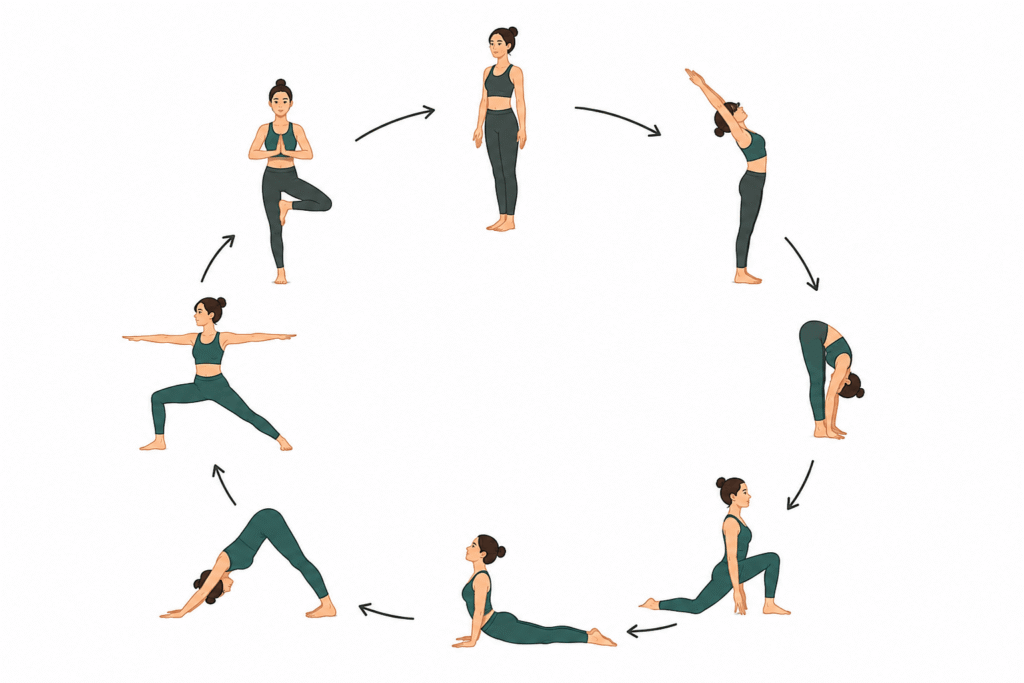
You don’t need a huge repertoire to get started. These five poses form the foundation of most yoga practices:
- Mountain Pose (Tadasana) — Teaches proper standing alignment and grounding.
- Downward-Facing Dog (Adho Mukha Svanasana) — Stretches the hamstrings, calves, and shoulders while building strength.
- Child’s Pose (Balasana) — A resting pose that gently stretches the back and hips.
- Cat-Cow (Marjaryasana-Bitilasana) — Improves spinal flexibility and relieves tension.
- Warrior I (Virabhadrasana I) — Builds leg strength and improves balance and focus.
Practicing these poses for just 10–15 minutes a day can help you build confidence before moving into a full class or longer routine.
Tips for Starting Your Yoga Journey
- Start with short sessions. Ten to fifteen minutes is plenty when you’re new — consistency matters more than duration.
- Use props if needed. Blocks, straps, and cushions aren’t cheating; they help you find proper alignment safely.
- Focus on breath, not perfection. Deep, steady breathing is more important than how a pose looks.
- Listen to your body. Discomfort is normal, but pain is a signal to ease off.
- Practice on an empty stomach. Try to wait at least 2–3 hours after eating before a session.
- Be consistent. Two or three short sessions a week will deliver better results than one long, occasional class.
Common Mistakes Beginners Make
Many newcomers push too hard, hold their breath during poses, or compare themselves to more experienced practitioners nearby. Yoga is not a competitive activity — it’s a personal practice. Progress looks different for everyone, and even five minutes of mindful movement counts as a win.
Getting Started at Home or in a Studio
You don’t need a studio membership to begin. Free platforms like YouTube offer excellent beginner-friendly routines, and many apps provide structured programs for those just starting out. That said, an in-person class can be valuable early on, since an instructor can correct your alignment and prevent injury.
Final Thoughts
Yoga for beginners is less about achieving perfect poses and more about building a sustainable habit that supports both body and mind. Start slow, stay consistent, and give yourself grace as you learn. Over time, you’ll likely notice not just physical changes, but a calmer, more centered approach to daily life.
Whether your goal is stress relief, flexibility, or simply trying something new, yoga offers a low-barrier entry point into a lifelong practice — one breath, one pose, at a time.
(Looking to target stomach fat too? Check out this at-home belly fat workout with no equipment.)
Leave a Reply